
Imaging
The Moment Everything Starts to Make Sense: Meet Brenda, One of Our Radiographers
Radiographer Brenda Mavundukure on the problem-solving behind every scan, and why the moment imaging brings clarity is the part of the job she values most.
Back to Insights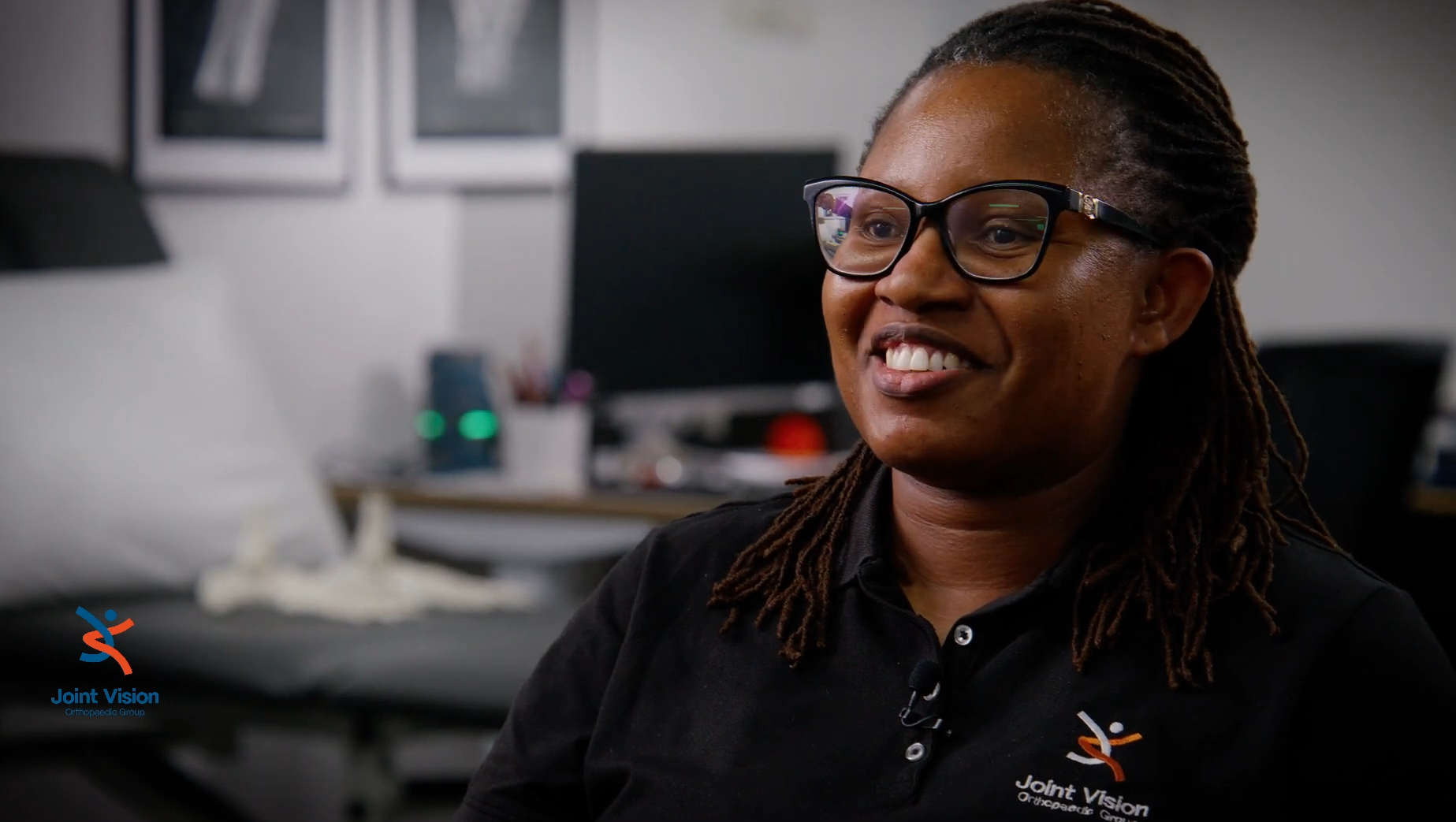
May 5, 2026
Written by
Joint Vision
People often walk into Joint Vision carrying more than an injury. There is uncertainty, frustration, sometimes a bit of fear. And often the turning point in their care begins quietly, with imaging.
For radiographer Brenda Mavundukure, that moment is why she does the job.
Finding her calling
Brenda did not always plan to become a radiographer.
Pharmacy was my first choice, but I soon discovered there was no chemistry between chemistry and myself.
Early in her training she saw how much imaging could change a patient's path.
A patient came in with ongoing pain but no clear diagnosis. Seeing how imaging provided answers and direction for their treatment really stayed with me.
Not just the image, the person
Radiography is often seen as a technical role. Ask Brenda what matters most and the answer is immediate: the patient connection.
She recalls supporting someone who had never had imaging before and was visibly overwhelmed.
Taking a few extra minutes to explain everything and reassure them completely changed their experience.
Problem-solving behind every scan
People don't always realise how much problem-solving happens behind the scenes. If someone has limited mobility or significant pain, we adapt positioning and technique to still get the best possible images.
Good imaging is not only about the equipment. It is about tailoring the process to the person in front of you.
Why imaging matters
I've seen patients come in feeling uncertain or frustrated, and once imaging provides clarity, everything starts to move forward: diagnosis, treatment planning, recovery.
That clarity is what allows surgeons, physiotherapists and podiatrists to act quickly.
A connected team
Quick collaboration helps fast-track care for a patient. That shared purpose is something I really enjoy.
Turning nerves into confidence
A lot of patients apologise for being nervous. I always reassure them that it's completely normal.
Her approach is simple: explain things clearly, check in throughout, and guide patients step by step.
Even something small like talking them through each stage can shift their experience from fear to feeling supported.
Beyond the clinic
Outside work, Brenda mentors young people through her church's Adventure and Pathfinder programs, helping them build confidence, resilience and life skills.
Recovery is not always linear
Trust the process and be kind to yourself. Recovery isn't always linear. The people who stay consistent, ask questions, and lean on their care team tend to have the best outcomes.
You can read more about imaging and investigations, the Fracture and Injury Clinic, or book an appointment.
Information on this website is general and may not apply to your circumstances. It does not replace individual clinical advice. If you have a health concern, use the relevant care pathway or speak with a qualified health professional. Seek urgent help for severe or rapidly worsening symptoms or a possible emergency.
What to do next