
Allied health
Exercise for Joint Health and Mobility
How exercise supports joint health, and the strengthening, range-of-motion, low-impact aerobic and balance work that helps maintain mobility at any age.
Back to Insights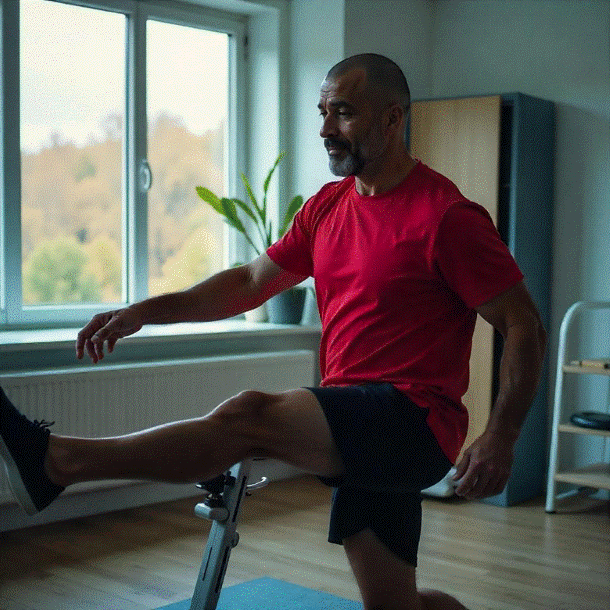
May 13, 2025
Written by
Joint Vision
Joints are the foundation of how we move, from walking to running and everything in between. As we age or manage injury, looking after them matters more. Joint health is not only about avoiding pain; it is about being able to keep doing what you value.
Arthritis is one of the most common chronic conditions in Australia, and the effects on mobility and daily life are significant. Exercise, done regularly and appropriately, helps maintain flexibility, build supporting strength and manage joint pain.
Why exercise helps
- Strengthens muscles and supporting tissue. Strong muscles around a joint help share load, reducing stress on the joint itself. This matters particularly for weight-bearing joints such as the hip, knee and spine.
- Maintains range of motion. Movement and stretching help maintain flexibility, which reduces stiffness and discomfort.
- Supports joint lubrication. Regular movement stimulates production of synovial fluid, which reduces friction within the joint.
- Helps manage pain. Lower-impact activity in particular can help reduce pain, which is useful for people managing osteoarthritis.
- Supports long-term joint function. Consistent, appropriate loading helps maintain the structure and function of the joint over time.
Types of exercise that help
There is no single right program. The best exercise depends on your condition, age and capability, and is best guided by a physiotherapist or exercise physiologist. The categories below are broadly useful.
1. Strengthening
- Leg raises, targeting the quadriceps and hamstrings, which support the knee and hip.
- Bridges, working the glutes and lower back.
- Resistance band work, which builds strength with controlled load.
2. Range of motion and stretching
- Hip flexor stretch, useful for hip stiffness.
- Shoulder circles, to maintain shoulder range.
- Knee extensions, for knee stiffness.
3. Low-impact aerobic exercise
- Swimming. Buoyancy reduces load through the joints while supporting cardiovascular fitness.
- Cycling, stationary or outdoor, keeps the knee and hip moving under controlled load.
- Walking, simple and effective for maintaining joint function.
4. Balance and coordination
- Single leg standing, which challenges the stabilising muscles around the ankle and knee.
- Heel-to-toe walking, for balance and coordination.
- Tai chi, combining gentle movement with balance and focus.
5. Yoga and Pilates
Both combine strength, flexibility and balance in one session, and can be useful for the spine, hips and shoulders. Gentler positions can help reduce stiffness and support mobility.
Getting guidance
If you are managing arthritis, recovering from surgery or unsure where to start, an exercise physiologist or physiotherapist can build a program suited to your condition and goals.
You can read more about exercise physiology, physiotherapy, or book an allied health appointment.
Information on this website is general and may not apply to your circumstances. It does not replace individual clinical advice. If you have a health concern, use the relevant care pathway or speak with a qualified health professional. Seek urgent help for severe or rapidly worsening symptoms or a possible emergency.
What to do next