Shoulder to hand
Do I Need a Cast or a Splint? Understanding Common Hand and Finger Injuries
Mallet finger, jammed fingers, volar plate and thumb injuries: what the difference is between a cast and a splint, and the signs that mean a hand injury should be assessed.
Back to Insights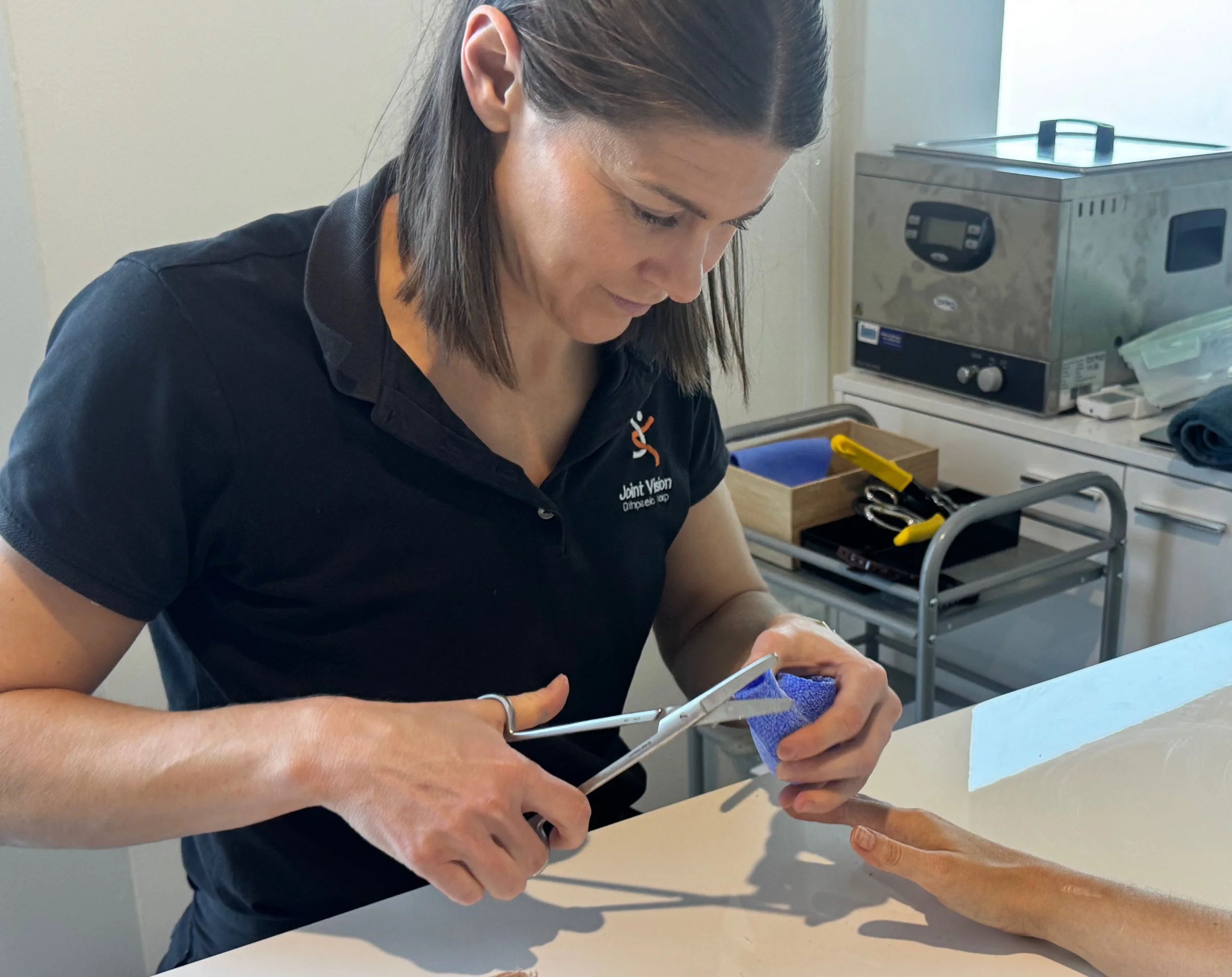
June 16, 2026
Written by
Joint Vision
A sore finger after sport. A thumb injury from a fall. A hand caught awkwardly at work.
Hand and finger injuries are common, but many people are unsure whether they need a cast, a splint, or simply time to recover.
Every injury is different. While some fractures and serious injuries require rigid immobilisation or surgery, many hand and finger injuries can be managed with a custom splint and a structured rehabilitation program. Understanding the difference can help you get the right treatment sooner and reduce the risk of longer-term problems.
Common hand and finger injuries
Mallet finger
Mallet finger occurs when the tendon that straightens the tip of the finger is damaged, often after a ball strikes the end of the finger. Common symptoms include:
- Drooping of the fingertip
- Pain and swelling
- Difficulty straightening the finger
Although it can look like a minor injury, prompt treatment matters. Many mallet finger injuries can be managed with a specialised splint that holds the fingertip in the correct position while the tendon heals.
Jammed fingers and volar plate injuries
A jammed finger is often dismissed as part of sport, but these injuries can involve damage to the ligaments and supporting structures around the joint. One common example is a volar plate injury, which occurs when the finger is forced backwards beyond its normal range of motion. Symptoms may include:
- Swelling around the middle joint
- Pain when bending or straightening
- Bruising
- Reduced movement
Appropriate splinting and rehabilitation can help protect the joint while maintaining function during recovery.
Thumb injuries
The thumb plays an important role in grip strength and hand function, and injuries can occur during sport, falls, workplace accidents or everyday activities. Depending on the injury, treatment may involve supportive splinting, activity modification, physiotherapy-guided rehabilitation or specialist orthopaedic assessment. Early diagnosis is particularly important when ligament injuries or fractures are suspected.
What is the difference between a cast and a splint?
Both protect injured structures while they heal, but they serve different purposes.
Casts
Casts provide rigid immobilisation and are commonly used for certain fractures, more complex injuries, and situations where movement must be completely restricted.
Splints
Splints can provide targeted support while allowing greater comfort and flexibility. Benefits may include a customised fit, easier monitoring of swelling, improved hygiene, greater comfort during recovery, and the ability to adjust treatment as healing progresses.
Not every injury is suitable for a splint, which is why an accurate assessment matters before deciding on treatment.
When should you seek assessment?
Some minor injuries improve with rest, but the following signs indicate you should seek medical attention:
- Significant swelling
- Visible deformity
- Difficulty moving the finger or thumb
- Ongoing pain
- Numbness or tingling
- Suspected fracture
- Symptoms that are not improving after several days
Prompt assessment can help identify more serious injuries and reduce the risk of long-term stiffness, weakness or loss of function.
A more connected approach to recovery
At Joint Vision, the physiotherapy team can provide a range of custom splinting solutions for selected hand and finger injuries, so patients can access assessment, imaging, splinting and rehabilitation in one location. For complex hand injuries and specialised hand therapy requirements, the team works closely with accredited hand therapists across the region.
If you have injured your hand, wrist, thumb or fingers, you can read more about upper limb care or learn about the Fracture and Injury Clinic.

Information on this website is general and may not apply to your circumstances. It does not replace individual clinical advice. If you have a health concern, use the relevant care pathway or speak with a qualified health professional. Seek urgent help for severe or rapidly worsening symptoms or a possible emergency.
What to do next