
Joint Vision news
Beyond Surgery: Why the Best Ideas Often Start Outside Your Professional Lane
Dr Meghan Dares shares how Joint Vision grew from orthopaedic surgery into an integrated model of musculoskeletal care, research and prevention.
Back to Insights
September 7, 2026
Written by
Joint Vision
Dr Meghan Dares speaking at the Illawarra Women in Business event in Wollongong.
When Dr Meghan Dares began training as an orthopaedic surgeon, she expected her career to be built around solving the clinical problem in front of her.
What she didn’t expect was that some of the biggest problems she would eventually try to solve would sit outside the operating theatre.
Speaking to the Illawarra Women in Business community on Friday, Meghan reflected on the journey that has taken her from surgeon to co-founder of Joint Vision Orthopaedic Group, and into research, digital health, new models of care and preventative health.
The thread running through that journey has been simple: sometimes the problem worth solving sits just outside the lane you thought you were meant to stay in.
Looking beyond surgery
Orthopaedic surgery trained Meghan to assess a problem, make a decision and act.
But as her practice grew, she became increasingly aware that surgery was only one part of what many patients needed.
Some people needed physiotherapy. Others needed podiatry, imaging, orthotics, pain management or a combination of several services.
The frustration was not that those services didn’t exist. It was that patients were often left to move between them on their own.
That question helped shape the model that became Joint Vision: bringing clinicians together around the patient, with a shared plan rather than a series of disconnected appointments.
For Meghan, that meant stepping well beyond the role she had spent years training for.
She was suddenly dealing with property, staffing, systems, business models and the practical realities of building a healthcare organisation.
None of that had been part of becoming a surgeon.
But the problem was clear enough to keep following.
Building around the problem
One of the ideas Meghan shared with the IWIB audience was that good ideas do not always begin with a grand strategy.
Sometimes they begin with irritation.
You see something that is harder than it should be. You see people falling between gaps. You see a process that makes sense on paper but makes less sense for the person actually moving through it.
And eventually you start asking whether there is a better way.
That thinking has continued to shape Joint Vision.
The organisation has grown into a multidisciplinary musculoskeletal service bringing orthopaedic surgery together with allied health, imaging, pain medicine, orthogeriatrics and research.
But the thinking behind it remains fairly straightforward: start with what the patient needs, then build the team around that.
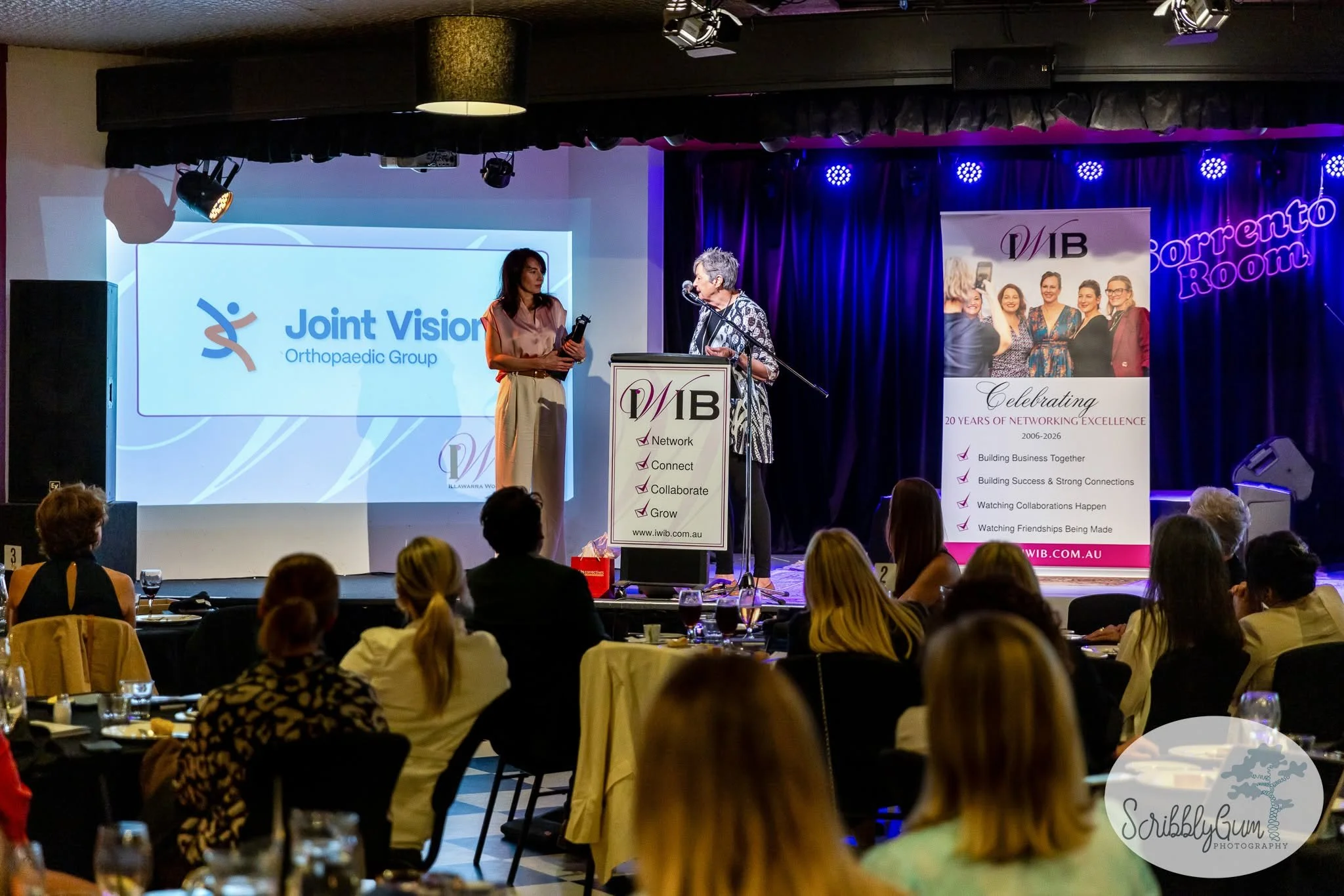
Dr Meghan Dares on stage at the IWIB Networking Lunch at Centro, with Joint Vision Orthopaedic Group supporting the event.
Being prepared to test your own assumptions
Growth brought another question.
How do you know the model is actually working?
Meghan spoke about the importance of being willing to test the ideas you believe in, rather than simply becoming attached to them.
That led to the establishment of the Joint Vision Orthopaedic Research Institute, which now examines aspects of treatment and recovery and gives the organisation a way to test assumptions in its own clinical practice.
For Meghan, that willingness to be challenged matters.
Healthcare is full of practices that have been repeated for years because that is how they have always been done. Research creates the opportunity to ask whether they still make sense.
And sometimes the answer is uncomfortable.
That is part of the job.
Moving the conversation earlier
More recently, the same pattern of questioning has taken Meghan into preventative health.
Orthopaedic surgeons often see people after a problem has already affected their lives for years.
Pain has reduced their movement. Strength has fallen away. Activities they once enjoyed have disappeared. By the time they reach a surgeon, the issue is often much bigger than the joint itself.
That prompted another question: what would happen if more of that conversation started earlier?
It is part of the thinking behind Phoenix Health Co, established by Meghan and Wynter Dares with Dr Oscar Horky and Katie Horky.
The model brings preventative medicine together with diagnostics, movement and recovery, with the aim of helping people understand where they are now and what they can act on before problems become harder to change.
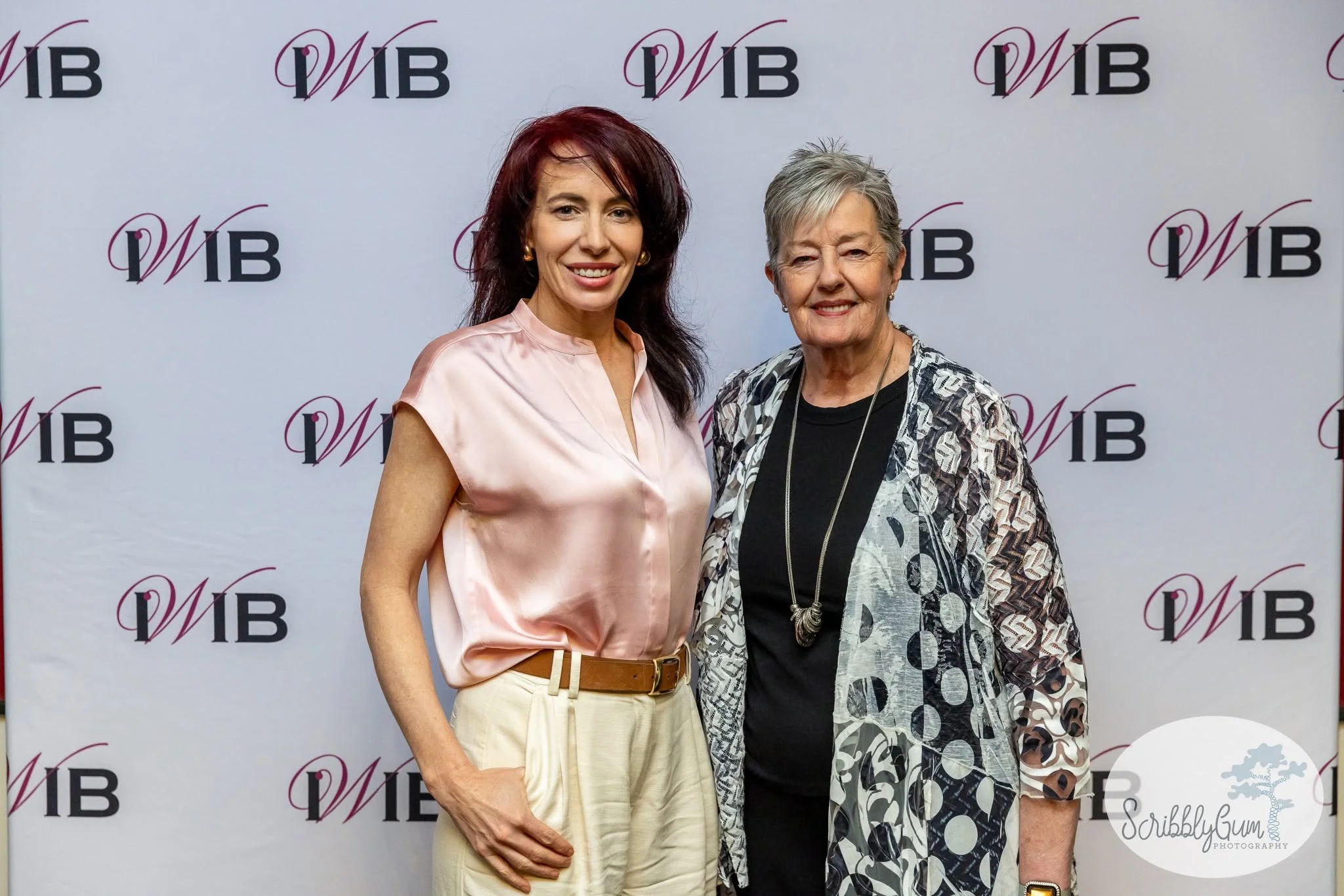
Dr Meghan Dares with the director of Illawarra Women in Business Glenda Papac.
You don’t need to stay in your lane
Perhaps the most useful part of Meghan’s message to the IWIB audience was that professional expertise does not have to become a boundary.
The thing you are trained to do can also give you a vantage point.
It can help you see the problem beside the one you were originally hired to solve.
That doesn’t mean every idea should be pursued. It still has to survive scrutiny. The risk has to be understood. The numbers have to make sense.
But waiting for absolute certainty can become another way of doing nothing.
For Meghan, the important step has often been deciding whether the problem is real enough to justify acting.
That approach has taken her from orthopaedic surgery into integrated care, research and preventative health.
Not because those were part of a carefully mapped career plan.
Because each time, there was another problem she could no longer ignore.
Interested in how Joint Vision is rethinking musculoskeletal care?
Learn more about our multidisciplinary model, research and approach to patient care.
Information on this website is general and may not apply to your circumstances. It does not replace individual clinical advice. If you have a health concern, use the relevant care pathway or speak with a qualified health professional. Seek urgent help for severe or rapidly worsening symptoms or a possible emergency.
What to do next